Posts

Showing posts with the label oplegnathus insignis

Sinking death syndrome during finfish larviculture

Image
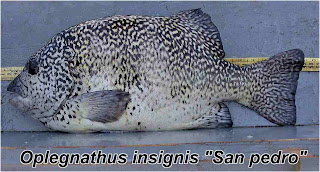
Sinking death syndrome during finfish larviculture Masatoshi FUTAGAWA / CORDUNAP June 30, 2012 Phenomenon Sinking death syndrome occur during early life stage of finfish larviculture, 3 to 7 days post hatch-out (DPH), that larvae settle on bottom at nighttime mostly and it makes mass mortality due to bacteria contamination and anoxia. Several species has the syndrome and that is one of the bottlenecks of mass production. I had the syndrome during the larviculture of Graus nigra , Pacific beakfish ( Oplegnathus insignis ), Japanese flounder ( Paralichthys olivaceus ) and Grater amberjack ( Seriola dumerili ). Causes Increasing body density Finfish larvae consume yolk and oil droplet few days after hatch-out and change body density. Usually, body density of larvae is heavier than water (1.0236±0.0001 at WT 25 ̊C). According to Teruya et al. 2008 , Greater amberjack larva shows it consume yolk and oil droplet until 4 DPH and body water contents reduce from 2 DPH (93.5...

Overview of marine ranching in Chile

Image
Reduction of coastal fish resources is common problem in the whole world due to overfishing. Qn the other hand, demand is rising due to health consciousness (less cholesterol), contamination of chicken (influenza), cow (BSE) and pork (HEV). Marine ranching is the one of solution to recovering coastal fish resources which has operated in Japan more than four decades. The result shows that some fishes are recovered, even increased, and contribute benefits. Chile coast water has higher productivity compare to Japan and the method produce more fishes quickly. It may create new business model which has less energy consumption, no contamination and sustainable production, and create employment at rural area. 1.             What is Marine ranching 1.1.              Idea and activities General ideas of marine ranching are releasing fish juvenile dismissing species int...

Preliminary morphological study of Pacific beakfish (Oplegnathus insignis) from larva to juvenile st North of Chile

Image
I published the preliminary morphological study of Pacific beakfish ( Oplegnathus insignis ) from larva to juvenile at North of Chile. Full text at my archive . Abstract The project of "Optimizacion de la Tecnlogia de Produccion de juveniles de San Pedro ( Oplegnathus insignis )" is running under INNOVA CORFO and CORDUNAP since 2006 and the object is to optimize seed production technique about O. insignis . The project produced some juveniles in 2007 and it had some knowledge of the fish. This paper informs the morphological changes of O. insignis from larva to juvenile. The newly hatch-out larva shows TL 2.58+-0.13 mm, it has oval ball yolk and spherical oil droplet. Oral cavity open without teeth and eye structure develop on Day 2 which color turn to black. At Day 3, larva shapes fusiform and head develop with jaws and teeth. Pectoral fins grow and fin fold is constructed at caudal peduncle part. Hypural bone shapes triangle on Day 41 approximately. Body depth in...

Relation between spawning and water temperature of Oplegnathus insignis in North of Chile

Image
I published my study about spawning of Pacific beakfish at North of Chile. Full text at my archive . Abstract Since 2006, the project "Optimizacion de la tecnologia de procuccion de juveniles de San pedro ( Oplegnathus insignis )" is running under INNOVA CORFO with CORDUNAP. Wild captured O. insignis are rearing at Universidad Arturo Prat Ciencia Del Mar (UNAPDCM) since 2002. Ten females (biomass 13.07 Kg) spawned 1,768,292 eggs with 20 times spawning under water temperature 19.3+-0.58C from January 7 to March 17, 2007. Spawning egg consist 1,574,492 floating eggs (89.0 %) and 1,457,692 hatch-out larvae (92.6 %). O. insignis is multiple spawning fish and the egg behave isolated epipelagie eggs, diameter is 0.87 to 0.96 mm. The egg has one oil droplet, diameter is 0.16 to 0.21 mm. Between spawning quantity and the average water temperature while 4 days before spawning shows the most strong relation at 19.6 C. Thus, the result suggests that the fish takes 4 days to mat...